
Gideon Training Solutions
Forged Through Discipline
Gideon Training Solutions
Forged Through Discipline
New Gun Owners
Buying your first firearm is only the beginning. This guide covers everything you need to know — safe storage, the four rules, choosing training, ammo basics, maintenance, and Texas law.
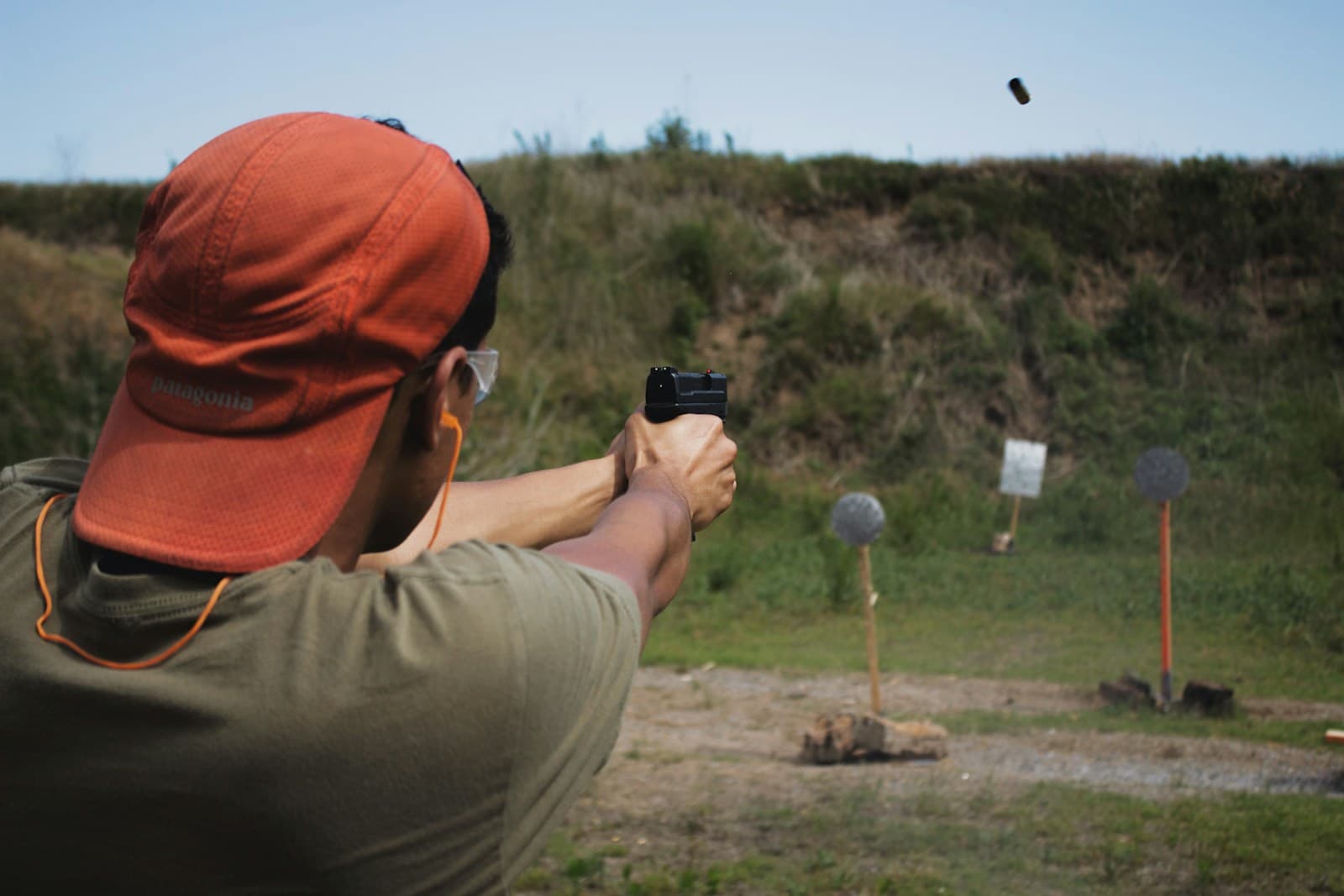
Congratulations — and now, immediately: put the gun somewhere secure before you do anything else. Before you show it to family members, before you look at it more, before you call anyone. If you do not yet own a safe or lockbox, place the unloaded firearm with the action open in a location no one else will access while you arrange proper storage.
This is not meant to dampen the moment — it is the moment. The first decision you make as a gun owner sets the standard for every decision that follows.
These rules have no exceptions. They apply every time you handle a firearm, regardless of whether you believe it is unloaded.
1. Treat every firearm as if it is loaded, at all times. 2. Never point the muzzle at anything you are not willing to destroy. 3. Keep your finger off the trigger until your sights are on the target and you have decided to fire. 4. Know your target and what is beyond it.
The engineering logic: if you observe all four rules simultaneously, a negligent discharge cannot injure or kill. The rules are redundant by design. A hole in a wall is the consequence of breaking two rules. A tragedy is the consequence of breaking three.
Safe storage is not optional. It is the legal, ethical, and practical foundation of responsible ownership.
For a nightstand or quick-access situation, a biometric or RFID quick-access safe provides the balance of security and speed. They cost $80–$200 and can be mounted to furniture. For long guns or a growing collection, a full-size gun safe rated for fire resistance (UL 72 Class 350) and anchored to a wall stud is the standard.
Texas law: Texas does not currently mandate firearm storage at home, but it does criminalize "making a firearm accessible to a child" under certain circumstances. More importantly, you bear full legal and moral responsibility for what is done with a firearm that was accessible from your home.
The most common mistake new gun owners make is going to the range before taking a class. The range teaches you nothing if your technique is wrong from the start — you will simply be reinforcing bad habits at volume.
A quality fundamentals class covers the four rules, stance, grip, sight alignment, sight picture, trigger control, and administrative handling (loading, unloading, malfunction clearing). It takes half a day and compresses six months of self-taught frustration into a single productive session.
Gideon Training Solutions' Firearms Safety & Fundamentals course is specifically designed for first-time and early-stage owners. No prior experience required.
If you have not yet purchased a firearm, rent before you buy. Most ranges rent handguns at low cost. Shoot at least three different models before deciding.
Key criteria: — Fit: The grip should feel secure without stretching. Your trigger finger should reach the trigger without shifting. — Purpose: A home defense gun differs from a carry gun differs from a range gun. Know your primary use case. — Caliber: 9mm is the right choice for most first-time owners. Manageable recoil, affordable practice ammunition, and modern loads are highly effective for defensive use. — Reliability: Buy from established manufacturers with long track records (Glock, Smith & Wesson, Sig Sauer, Springfield Armory, Ruger). Avoid no-name budget pistols as your first firearm — reliability is not where you compromise.
Defensive ammunition (hollow-point) and practice ammunition (full metal jacket / ball) serve different purposes and should be stored separately.
Practice with FMJ — it is cheaper and perfectly adequate for building skills. When you load your carry gun or home defense gun, use quality defensive hollow-points. Federal HST, Speer Gold Dot, Hornady Critical Defense, and Winchester Defender are all well-tested options in common calibers.
Never use steel-case or range-pickup ammunition in a defensive firearm. Keep a consistent load in your defensive gun and verify that your specific firearm runs it reliably — shoot at least 50 rounds of your chosen defensive load before trusting it.
A modern centerfire handgun from a reputable manufacturer is remarkably reliable and tolerant of neglect — but it still needs care.
After every range session: field strip (only if you know how — the manual shows this), run a brush through the barrel, wipe down with a clean patch, apply a light coat of lubricant to the slide rails and barrel hood, and reassemble. This takes ten minutes.
Monthly: even if you have not shot it, inspect your defensive firearm for rust, dust, and lubricant degradation. Function-check after every cleaning — the most important step that most people skip.
Your owner's manual is the best maintenance reference for your specific firearm. Read it cover to cover before you clean the gun the first time.
Texas law regarding firearms is generally permissive, but "generally permissive" is not a substitute for knowing the specifics.
Texas Penal Code 30.06 and 30.07 govern concealed and open carry on posted premises — you are responsible for knowing these signs and respecting them. Federal law governs firearms in post offices, federal buildings, and schools (regardless of state law). Your license to carry does not travel to other states without verifying reciprocity.
When in doubt: do not carry into a location you are not certain is legal. Carry law is one of the topics covered in our Texas LTC course — it is worth the class time even if you already have your license, to fill gaps that self-study often leaves.
Related Courses
Our Firearms Safety & Fundamentals course is built specifically for new and early-stage gun owners. No experience required.
Firearms Safety & Fundamentals
Texas License to Carry (LTC)