
Gideon Training Solutions
Forged Through Discipline
Gideon Training Solutions
Forged Through Discipline
Legal
Comprehensive Safety Guidelines for All Range Facilities
This policy is provided for general informational purposes and should be reviewed by a qualified attorney before final publication.
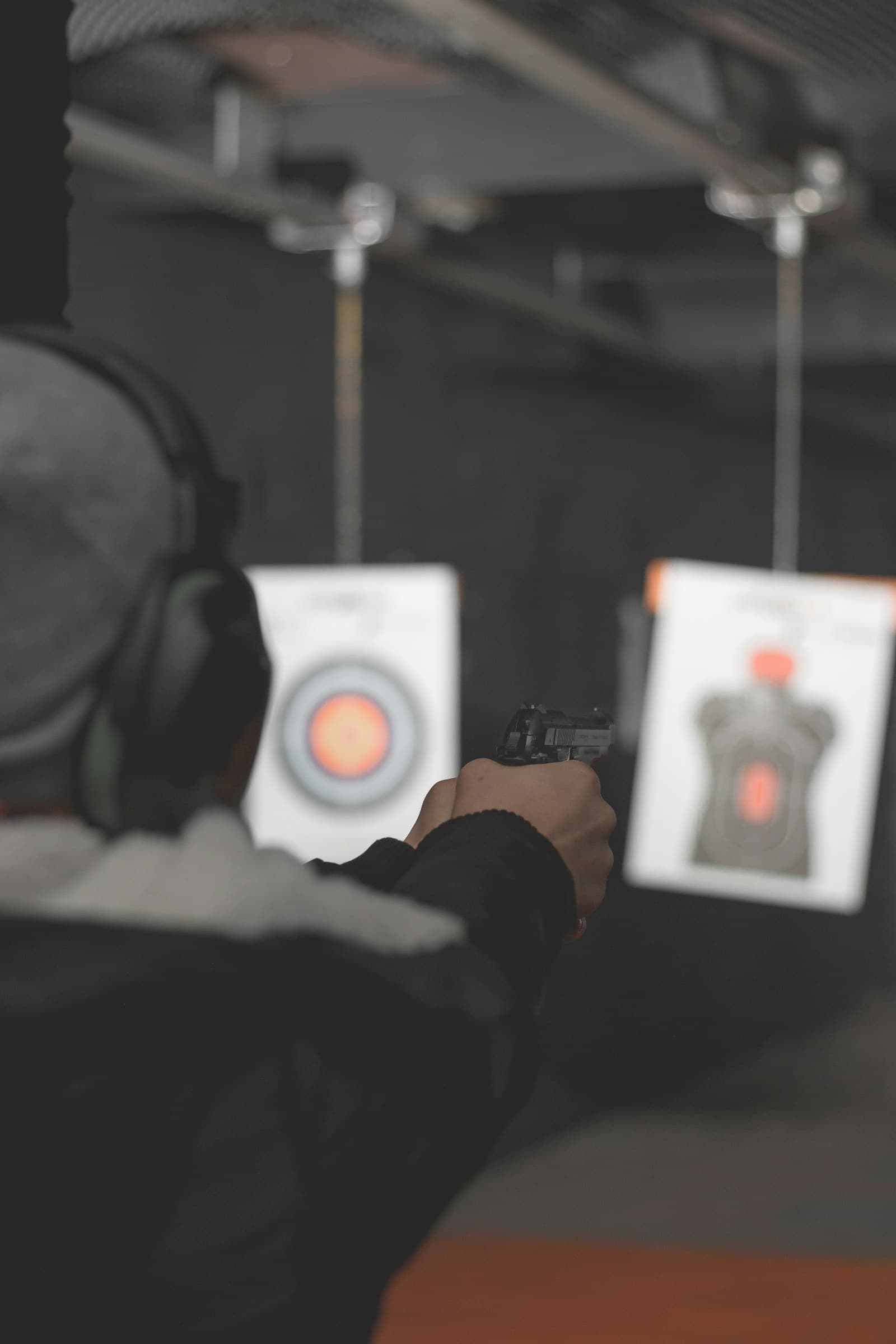
All individuals present at the range during Gideon Training Solutions sessions must comply with these range safety rules in addition to the facility's own posted rules. Where conflicts exist between our rules and the facility's rules, the more restrictive rule applies. All participants must sign a range waiver and liability release before participating in any live-fire activities. The Range Safety Officer (RSO) has absolute authority on the range. Any instruction from the RSO must be followed immediately and without argument.
The four cardinal rules of firearm safety are strictly enforced on the range: (1) Treat every firearm as if it is loaded — verify chamber condition every time you pick up or receive a firearm. (2) Never point a firearm at anything you are not willing to destroy — muzzles must be pointed downrange at all times when on the firing line. (3) Keep your finger off the trigger until on target and ready to fire — trigger discipline is mandatory at all times. (4) Be sure of your target and what is beyond it — never fire unless you have positively identified your target and confirmed a safe backstop.
All participants must understand and immediately respond to the following range commands: "CEASE FIRE" — Stop firing immediately, remove finger from trigger, keep muzzle pointed downrange, and await further instructions. This command can be given by anyone on the range. "COLD RANGE" — All firearms must be unloaded, actions opened, and placed on the shooting bench with muzzles pointed downrange. No handling of firearms is permitted during a cold range. "HOT RANGE" — Firearms may be loaded and firing may commence under the supervision of the instructor. "READY ON THE LEFT / READY ON THE RIGHT / READY ON THE FIRING LINE" — Confirmation that all shooters are prepared. "COMMENCE FIRING" — You may begin the specified shooting exercise. "CLEAR AND SAFE" — All firearms have been verified unloaded and actions are open.
Gideon Training Solutions generally operates under cold range protocols: Firearms are unloaded and actions are open at all times unless shooters are on the firing line and have been given the command to load and fire. During a cold range, no firearms may be handled for any reason. Shooters may go downrange to check or set targets only during a declared cold range, after all firearms have been verified clear by the RSO. Hot range protocols may be implemented for advanced training exercises only with the explicit authorization of the lead instructor and RSO. Under hot range conditions, loaded firearms may be holstered or staged per instructor direction.
Wrap-around eye protection meeting ANSI Z87.1 impact standards is mandatory for all individuals on the range, including instructors and observers. Dual hearing protection (earplugs plus earmuffs) is strongly recommended and may be required for certain high-decibel exercises. At minimum, properly fitted earplugs or earmuffs with a Noise Reduction Rating (NRR) of 22 or higher must be worn at all times while on the range. Prescription eyeglasses do not qualify as eye protection unless they meet ANSI Z87.1 standards and provide wrap-around coverage.
Only ammunition approved by the lead instructor and the range facility may be used. Steel-core, armor-piercing, incendiary, tracer, and steel-jacketed ammunition is prohibited unless specifically authorized. Reloaded ammunition is generally not permitted. Frangible ammunition may be required at certain indoor range facilities. All ammunition must be inspected by an instructor before use. Students must declare all ammunition brought to the range.
If you experience a firearm malfunction or stoppage: Keep the muzzle pointed downrange at all times. Keep your finger off the trigger. Raise your support hand to signal the instructor. Wait for the instructor to assist you. Do not attempt to clear a malfunction unless specifically trained to do so and authorized by the instructor. If a squib load is suspected (a bullet lodged in the barrel), do not fire the weapon. Cease fire immediately, keep the muzzle pointed downrange, and alert the instructor. Never look down the barrel of a firearm for any reason.
Drawing from a holster is permitted only during designated exercises and only with explicit instructor approval. All holster draw exercises must be conducted under direct instructor supervision. Only outside-the-waistband (OWB) holsters are permitted for initial training. Inside-the-waistband (IWB) holsters may be used only in advanced courses with instructor approval. Shoulder holsters, cross-draw holsters, and ankle holsters are not permitted on the firing line due to muzzle direction safety concerns. Serpa-style holsters with trigger-activated retention mechanisms are prohibited in Gideon Training Solutions courses.
Firearms laws and training requirements vary by state, county, and municipality. Gideon Training Solutions does not provide legal advice. Students should consult official government sources or a qualified attorney for legal questions.
If you have questions about our Range Safety Rules, please contact us at:
Gideon Training Solutions Arlington, Texas, USA Phone: 817-683-3282 Email: hj@gideontrainingsolutions.com
Legal Safety Notice
Firearms training involves inherent risks that cannot be eliminated regardless of the care taken to avoid them. Gideon Training Solutions reserves the right to refuse service to any individual who cannot legally possess firearms under federal or state law, or who demonstrates unsafe behavior during training. All training is conducted in compliance with Texas state law and federal firearms regulations. Students are solely responsible for ensuring they are legally eligible to possess and train with firearms in their jurisdiction. This document does not constitute legal advice. Consult a qualified attorney for legal questions regarding firearms ownership, carry, and use.